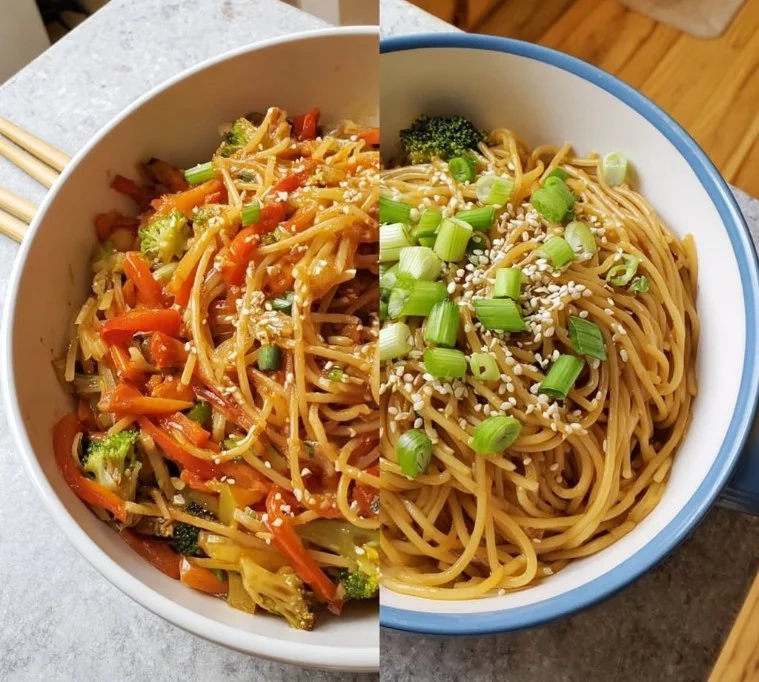
Cooking the noodles until they’re perfectly al dente is crucial for the texture; overcooking can lead to a mushy dish that lacks structure. Using soy sauce not only adds saltiness but also contributes to that glossy finish that makes the dish more appealing; without this, the noodles may look dull and unappetizing. Expect the finished dish to have a cohesiveness that allows each strand of noodle to cling to the sauce and vegetables, creating a satisfying mouthfeel. You may also find Bold Honey Bbq Sausage Pasta Recipe Weeknight Dinner useful.
What Goes In
- 8 oz spaghetti or noodles of choice
- 1 cup mixed vegetables (bell peppers, broccoli, carrots)
- 3 tablespoons soy sauce
- 2 tablespoons honey or maple syrup
- 1 tablespoon rice vinegar
- 1 tablespoon sesame oil
- 2 cloves garlic, minced
- 1 teaspoon ginger, grated
- Sesame seeds for garnish
- Chopped green onions for garnish
These ingredients work together to create a colorful and flavorful dish. This lineup ensures a balance of sweetness, saltiness, and freshness. You may also find Chicken And Potatoes Recipe useful.
How It Comes Together
- Cook the spaghetti or noodles according to package instructions; drain and set aside. Look for the noodles to be tender but still firm to the bite.
- In a large pot, heat the sesame oil over medium heat until it shimmers. This shimmery cue tells you it’s hot enough for the next step.
- Add the minced garlic and grated ginger, sautéing until fragrant. The aroma will turn warm and nutty, indicating they’re ready for the next addition.
- Stir in the mixed vegetables and cook until tender, taking about 4 minutes. You want the vegetables to retain some crunch while still being vibrant in color.
- In a small bowl, whisk together the soy sauce, honey (or maple syrup), and rice vinegar. The mixture should be well combined and slightly thickened.
- Add the cooked noodles to the pot along with the sauce mixture. Toss everything together gently so that the noodles are evenly coated.
- Toss everything together until well combined and heated through, which should take about 2 more minutes. The sauce should cling to the noodles as they warm up, creating a cohesive dish.
- Serve warm, garnished with sesame seeds and chopped green onions. The garnish adds a fresh crunch to each bite.
Once the noodles are coated, the dish is ready to enjoy.
Quick Substitutions
- Spaghetti → Rice Noodles: They will cook faster and give a different texture; soak them first instead of boiling.
- Soy Sauce → Tamari: Use this gluten-free option for the same saltiness, but it may have a richer flavor.
- Vegetable Mix → Frozen Mixed Vegetables: This saves time, but be careful not to overcook them, as they are already blanched.
- Honey → Agave Nectar: The sweetness level is similar, but adjust the quantity slightly as agave is sweeter.
- Rice Vinegar → Apple Cider Vinegar: This substitute will add a different tang; use a little less to avoid overpowering the dish.
These substitutions will help adjust the recipe to fit your pantry needs.
Tips Before You Start
It’s essential not to rush the sautéing of the garlic and ginger; if they brown too quickly, they can turn bitter, negatively impacting the dish. Stir them frequently until fragrant, and this step will deepen the flavor of the entire dish. When incorporating the soy sauce, keep the heat at medium to avoid burning the sugars; otherwise, you risk creating a bitter undertone. If you’re using honey, mix it thoroughly to ensure it’s equally distributed in the sauce; unevenly mixed honey can result in sweet pockets in your dish, which can be overwhelming.
Common Mistakes to Avoid
- Cutting the vegetables too small: This leads to overcooking and loss of texture. Aim for uniform-sized pieces to ensure even cooking.
- Not draining the noodles adequately: This can make the dish watery and dilute the sauce. Make sure to shake out excess water before combining everything.
- Skipping the garish: This step adds not just flavor but also visual appeal to your dish. Don’t forget the sesame seeds and green onions for that final touch.
Keep these common pitfalls in mind to enhance your cooking experience.
Nutrition Overview
- Serving size: 1 cup
- Calories: 320
- Protein: 7g
- Carbohydrates: 60g
- Fat: 8g
- Fiber: 3g
These nutritional details give you an idea of what to expect from your meal.
Serving Ideas
- Serve with grilled chicken for added protein; it complements the saucy noodles well.
- Pair with a fresh cucumber salad to balance the richness of the noodles.
- Offer some sliced avocado on the side; the creaminess will enhance the overall texture.
- Consider adding kimchi for a spicy kick that contrasts nicely with the sweet noodles.
- Top with crushed peanuts for a crunchy element that supplies extra flavor.
These ideas can elevate your meal experience.
Storage and Reheat
- Store leftovers in an airtight container in the fridge for up to 3 days.
- If freezing, place them in a freezer-safe container, suitable for up to a month.
- Reheat in a pan over medium heat with a splash of water for moisture; stir continuously for about 5 minutes.
- The texture may become softer after resting in the fridge, but the flavors will still be there.
Flavor can intensify overnight, making the leftovers just as enjoyable as the first serving.
What to Do With Leftovers
Reinvent your leftover Teriyaki Noodles by tossing them into a stir-fry with additional proteins, like shrimp or tofu, for a quick meal. Another option is to wrap them in rice paper for fun, fresh spring rolls, served with extra dipping sauce on the side. Consider cold noodle salad by adding a light dressing and fresh veggies to transform your leftovers into a refreshing dish.
With these ideas, you can make the most of your leftovers while adding variety to your meals.
Conclusion
Cooking the noodles perfectly al dente, rather than softer, can dramatically change the texture of your dish. Next time, consider using frozen mixed vegetables to save time—they hold up well without losing color or crunch. Making this dish soon is an excellent way to create a balanced, satisfying meal that fits a busy schedule.
Print
Sweet Soy Vegetable Noodles
- Total Time: 25 minutes
- Yield: 4 servings 1x
- Diet: Vegetarian
Description
A colorful and flavorful noodle dish with a perfect balance of sweetness and saltiness, featuring mixed vegetables and a delicious soy sauce blend.
Ingredients
- 8 oz spaghetti or noodles of choice
- 1 cup mixed vegetables (bell peppers, broccoli, carrots)
- 3 tablespoons soy sauce
- 2 tablespoons honey or maple syrup
- 1 tablespoon rice vinegar
- 1 tablespoon sesame oil
- 2 cloves garlic, minced
- 1 teaspoon ginger, grated
- Sesame seeds for garnish
- Chopped green onions for garnish
Instructions
- Cook the spaghetti or noodles according to package instructions; drain and set aside.
- Heat the sesame oil in a large pot over medium heat until it shimmers.
- Add the minced garlic and grated ginger, sautéing until fragrant.
- Stir in the mixed vegetables and cook until tender, about 4 minutes.
- Whisk together the soy sauce, honey (or maple syrup), and rice vinegar in a small bowl.
- Add the cooked noodles to the pot along with the sauce mixture; toss gently.
- Continue tossing until well combined and heated through, about 2 minutes.
- Serve warm, garnished with sesame seeds and chopped green onions.
Notes
Avoid rushing the sautéing of garlic and ginger to prevent bitterness. Ensure the noodles are well-drained before mixing.
- Prep Time: 10 minutes
- Cook Time: 15 minutes
- Category: Main Course
- Method: Stir-frying
- Cuisine: Asian
Nutrition
- Serving Size: 1 serving
- Calories: 320
- Sugar: 10g
- Sodium: 400mg
- Fat: 8g
- Saturated Fat: 1g
- Unsaturated Fat: 6g
- Trans Fat: 0g
- Carbohydrates: 60g
- Fiber: 3g
- Protein: 7g
- Cholesterol: 0mg